
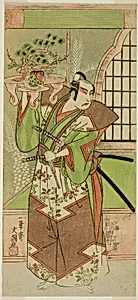
The Actor Ichikawa Yaozo II in a pre-performance celebration of the play "Soga Monogatari," performed at the Morita Theater in the second month, 1773
Medium
Color woodblock print; left sheet of hosoban triptych
Dimensions
30.2 × 13.7 cm (11 7/8 × 5 3/8 in.)
Classification
woodblock print
Department
Arts of Asia
Museum
Art Institute of Chicago
Accession Number
21966
Rights
Public Domain
Art Historical Context
In the vibrant world of 18th-century Edo (modern Tokyo), Ippitsusai Buncho captured the theatrical glamour of kabuki with this 1773 color woodblock print. Titled *The Actor Ichikawa Yaozo II in a pre-performance celebration of the play "S Monogatari," performed the Morita Theater in second month*, it depicts the celebrated actor Ichikawa Yaozō II amid festive preparations for the popular revenge tale *Soga Monogatari*. As the left sheet of a hosoban triptych—a narrow, three-panel format ideal for intimate actor portraits—this print invites viewers into the "floating world" (ukiyo-e) of theater life, where stars like Yaozō were cultural icons. Buncho, a master of the ukiyo-e school, excelled in yakusha-e (actor prints), rivaling contemporaries like Suzuki Harunobu. His precise lines and vivid colors, achieved through the labor-intensive woodblock process—involving multiple carved blocks for each hue—bring Yaozō's dynamic pose and ornate robes to life. The Morita Theater, one of Edo's "big four" venues, hosted lavish productions, and this image preserves a moment of anticipation before the curtain rose. Measuring just 30.2 × 13.7 cm, this intimate artwork from the Art Institute of Chicago's Arts of Asia collection highlights kabuki's role in Japanese popular culture, blending artistry with everyday spectacle. It reminds us how prints like this democratized celebrity, adorning homes and fueling fan fervor during the Edo period's golden age of theater.