
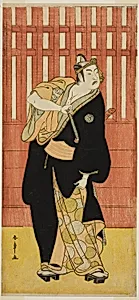
The Actor Ichimura Uzaemon IX as Soga no Goro Tokimune Disguised as Agemaki no Sukeroku in the Play Sukeroku Yukari no Edo-zakura, Performed at the Ichimura Theater in the Fifth Month, 1782
c. 1782
Medium
Color woodblock print; hosoban; from a pentaptych (?)
Dimensions
32.2 × 14.8 cm (12 11/16 × 5 13/16 in.)
Classification
woodblock print
Department
Arts of Asia
Museum
Art Institute of Chicago
Accession Number
31862
Rights
Public Domain
Art Historical Context
Step into the vibrant world of 18th-century Edo theater with Katsukawa Shunsho's *The Actor Ichimura Uza IX as Soga no Goro Tokimune Disguised as Agemaki Sukeroku in the Play Sukerokuari no Edo-zakura Created around 1782, this color woodblock print captures the kabuki performer in a dramatic disguise from the popular play staged at the Ichimura Theater fifth month. Shunsho, a master of uki-e—the "pictures of the floating world"—excelled in yakusha-e, or actor portraits, immortalizing the charisma and intensity of stage idols for everyday fans. Printed in the narrow hosoban format (32.2 × 14.8 cm), this piece may be part of a pentaptych, a five-panel design that would assemble into a panoramic theater scene when complete. Shunsho's precise carving and vibrant colors—achieved through layered woodblocks—highlight the actor's flowing robes, expressive gesture, and makeup, evoking the pulse of kabuki's revenge tales and romance. Housed in the Art Institute of Chicago's Arts of Asia collection, this print reflects ukiyo-e's cultural boom during Japan's Edo period (1603–1868). Affordable and mass-produced, such works bridged elite theater with commoners, preserving fleeting performances as cherished art. A window into Japan's playful, performative past!