
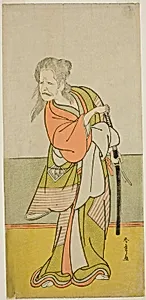
The Actor Nakajima Kanzaemon III as Yaguchi no Karasu-baba in the Play Hono Nitta Daimyojin, Performed at the Morita Theater in the Seventh Month, 1777
c. 1777
Medium
Color woodblock print; hosoban; from a multisheet composition
Dimensions
31.3 × 14.7 cm (12 5/16 × 5 13/16 in.)
Classification
woodblock print
Department
Arts of Asia
Museum
Art Institute of Chicago
Accession Number
22103
Rights
Public Domain
Art Historical Context
Step into the vibrant world of 18th-century Japanese kabuki with Katsukawa Shunsho's *The Actor Nakajima Kanzaemon III as Yaguchi noasu-baba in the Hono Nitta Daimojin*. Created around 1777, this color woodblock print captures the intensity of a performance at the esteemed Morita Theater in Edomodern-day Tokyo). Shunsho, a master the ukiyo-e—"pictures of the floating world"—ized in yakusha-e, or actor portraits, that immortalized kabuki stars in iconic roles. Printed in the narrow hosoban format (31.3 × 14.7 cm), this piece is part of a larger multisheet composition, allowing fans to collect and display scenes like trading cards of their favorites. The meticulous woodblock technique involved carving separate blocks for each color, achieving rich hues and fine details in the actor's expressive pose, flowing robes, and fierce makeup, evoking the supernatural character of Yaguchi no Karasu-baba. These prints were cultural phenomena, bridging theater and everyday life during Japan's Edo period, when kabuki thrived as populist entertainment. Shunsho's realistic yet stylized style elevated actor prints to high art, influencing later masters like Hiroshige and Hokusai. A window into fleeting performances, it reminds us how art preserved the thrill of live drama for posterity.