
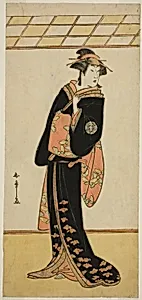
The Actor Nakamura Riko I as Lady Manko (Manko Gozen) (?) in the Play Soga Musume Choja (?), Performed at the Nakamura Theater (?) in the First Month, 1784 (?)
c. 1784
Medium
Color woodblock print; hosoban
Dimensions
32.1 × 14.7 cm (12 5/8 × 5 13/16 in.)
Classification
woodblock print
Department
Arts of Asia
Museum
Art Institute of Chicago
Accession Number
31889
Rights
Public Domain
Art Historical Context
In the vibrant world of 18th-century Edo (modern Tokyo), Katsukawa Shunshō captured the drama of kabuki theater in this striking color woodblock print from around 1784. Titled *The Actor Nakamura Riko I Lady Manko (M Gozen) (?) in the Play Soga Musumeja (?) , Performed at the Nakamura Theater in the First Month*, it portrays the onnagata (male actor specializing in female roles) Nakamura Riko I in a dynamic pose, embodying the tragic or heroic Lady Manko from a popular Soga clan revenge tale. Shunshō, a master of the ukiyo-e ("pictures of the floating world") school, excelled in yakusha-e—actor prints that immortalized kabuki stars as cultural icons. Printed in the narrow hosoban format (32.1 × 14.7 cm), this intimate vertical composition highlights Shunshō's signature techniques: bold outlines, vibrant mineral pigments, and meticulous woodblock carving for subtle textures in kimono folds and expressive faces. Hosoban prints were affordable souvenirs sold outside theaters, fueling the ukiyo-e boom during Japan's Edo period. Housed in the Art Institute of Chicago's Arts of Asia department, this work reveals kabuki's cultural dominance, blending artistry with everyday entertainment. Shunshō's realistic yet stylized portraits influenced generations, bridging theater and fine art for everyday admirers.