
The Adoration of the Shepherds
Parmigianino (Girolamo Francesco Maria Mazzola), 1524–27
About this artwork
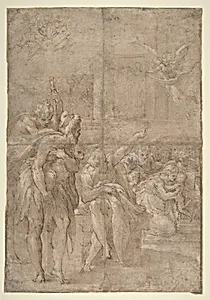
In the hushed glow of a Renaissance stable, Parmigianino's *The Adoration of the Shepherd* (1524–27) captures a pivotal biblical moment: humble shepherds kneeling before the infant Christ, Virgin Mary, and Joseph. Created by the young Italian artist Girolamo Francesco Maria Mazzola—better known as Parmigianino—this intimate drawing exemplifies early Mannerism, with its graceful, elongated figures and ethereal elegance influenced by Correggio. At just 8 9/16 x 5 7/8 inches, it likely served as a preparatory study for a larger painting, showcasing Parmigianino's precocious talent during his Parma period, before his fame in Rome and Bologna. Executed on brownish paper with pen and brown ink, brush and brown wash, and white gouache highlights over faint black chalk and red traces, the work demonstrates virtuoso techniques for conveying light, shadow, and volume. The subtle wash builds atmospheric depth, while gouache accents suggest divine radiance on the holy family, inviting viewers to ponder the scene's spiritual intimacy amid everyday humanity—men and women united in awe. Housed in the Metropolitan Museum of Art's Drawings and Prints department (Rogers Fund, 1946), this sheet highlights Parmigianino's mastery of disegno, the Renaissance ideal of drawing as the foundation of art. It's a window into 16th-century devotional life, blending piety with artistic innovation that would shape Mannerist grace for generations.