
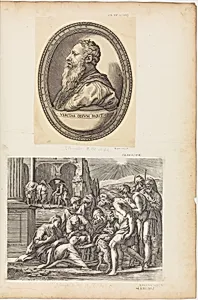
The Adoration of the Shepherds
Medium
Etching
Classification
Prints
Department
Drawings and Prints
Museum
Metropolitan Museum of Art, New York, NY
Credit
Harris Brisbane Dick Fund, 1927
Accession Number
27.78.2(153)
Rights
Public Domain
Tags
Art Historical Context
Behold *The Adoration of the Shepherds*, a captivating etching attributed to Giovanni Jacopo Car after designs by the Mannerist master Parmigianino (Girolamo Francesco Mariaola). This print depicts the biblical Nativity scene, where humble shepherds gather in reverence around the infant Christ, accompanied by the Virgin Mary, Joseph, and animals in a moment of divine humility and wonder. Parmigianino, a key figure of the 16th-century Mannerist movement, was renowned for his elegant, figures and graceful compositions, which infuse religious subjects with a refined, almost ethereal beauty. Etching, the medium here, was a revolutionary technique in the Renaissance, allowing artists like Caraglio—a skilled engraver who collaborated with Parmigianino—to produce intricate, tonal effects through acid-bitten lines on metal plates. This enabled wider dissemination of high-art designs beyond paintings, making sacred narratives accessible to a broader audience during the Counter-Reformation era. The work's profiles, men, women, and animals highlight dynamic groupings and subtle emotional depth, characteristic of Mannerist innovation. Acquired through the Harris Brisbane Dick Fund in 1927, this print resides in the Metropolitan Museum of Art's Drawings and Prints department, offering visitors a window into the interplay of Italian Renaissance printmaking and spiritual storytelling. A testament to artistic collaboration and technical prowess, it invites contemplation of faith's quiet joys.
About the Artist
Giovanni Jacopo Caraglio|Parmigianino (Girolamo Francesco Maria Mazzola) · 1500–1565
Italian, Parma or Verona ca. 1500/1505–1565 Krakow (?)