
The Adoration of the Shepherds
Medium
Oil on canvas
Dimensions
43 1/2 x 25 5/8 in. (110.5 x 65.1 cm)
Classification
Paintings
Department
European Paintings
Museum
Metropolitan Museum of Art, New York, NY
Credit
Bequest of George Blumenthal, 1941
Accession Number
41.190.17
Rights
Public Domain
Tags
Art Historical Context
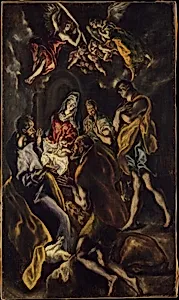
In the glow of a divine light, El Greco's *The Adoration of the Shepherds* (ca. 1612–14) captures a timeless biblical moment: humble shepherds kneel before the newborn Christ child, cradled by the Virgin Mary, with angels hovering above and a gentle lamb symbolizing innocence at their feet. This oil-on-canvas painting, measuring 43½ x 25⅝ inches, exemplifies the late-career work of Domenikos Theotokopoulos—better known as El Greco—produced in collaboration with his workshop in Toledo, Spain. The scene draws from the Gospel of Luke, blending earthly reverence with heavenly splendor, a popular motif in Renaissance and Baroque religious art. El Greco, a Greek-born master who fused Byzantine icons with Venetian color and Mannerist elongation, infuses the figures with dramatic, ethereal forms—tall, swaying bodies and luminous faces that convey profound spiritual ecstasy. His signature use of cool blues, vibrant golds, and stark chiaroscuro heightens the emotional intensity, drawing viewers into the sacred mystery. Created during Spain's fervent Counter-Reformation era, the painting reflects the era's emphasis on devotional imagery to inspire faith. Bequeathed to the Metropolitan Museum of Art in 1941 by George Blumenthal, this intimate yet powerful work showcases El Greco's enduring influence, bridging Eastern mysticism and Western drama for generations of admirers.