
The Agony in the Garden
Nicolas Poussin, 1626–27
About this artwork
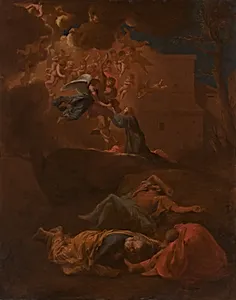
Nicolas Poussin's *The Agony in the* (1626–27) captures a pivotal moment from the New Testament: Jesus Christ's anguished prayer in the Garden ofethsemane before his betrayal and crucifixion. Kneeling in solitude, Christ is comforted by an angel, while his sleeping disciples nearby symbolize human frailty. Painted early in Poussin's, shortly after his arrival in Rome, this work reflects his emerging classical style, blending Renaissance ideals with Baroque emotion—inspired by masters like Raphael and ancient sculpture. Rendered in oil on copper—a rare and demanding support that yields a smooth, jewel-like surface for intricate details—this compact panel (24 1/8 × 19 1/8 in.) showcases Poussin's mastery of light and composition. The copper medium enhances the painting's luminous glow, heightening the spiritual drama and emotional depth, making it a standout example of 17th-century French Classicism. Now at the Metropolitan Museum of Art, gifted in 2021, this piece invites visitors to ponder themes of suffering, divine support, and quiet heroism. Poussin's restrained yet profound depiction elevates a familiar biblical story into timeless meditation.