
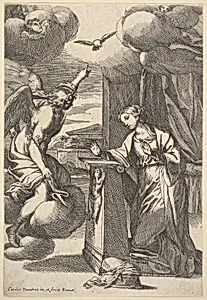
The Annunciation
17th century
Medium
Etching; second state of two (Bartsch)
Dimensions
sheet: 8 3/8 x 5 11/16 in. (21.2 x 14.5 cm)
Classification
Prints
Department
Drawings and Prints
Museum
Metropolitan Museum of Art, New York, NY
Credit
Harris Brisbane Dick Fund, 1926
Accession Number
26.70.3(58)
Rights
Public Domain
Tags
Art Historical Context
Carlo Maratti’s *The Annunciation* captures the pivotal biblical moment when the angel Gabriel announces to the Virgin Mary that she will Christ. Created in the 17th century by this influential Italian artist, the etching reflects the Baroque period’s emphasis on dramatic yet graceful religious imagery, blending classical composure with emotional clarity to make sacred stories accessible to a wide audience. As an etching—the second state of two—the work highlights the medium’s importance in disseminating art during this era. Etching allowed artists to produce fine, expressive lines on a modest scale, here measuring just 8 3/8 by 5 11/16 inches. This intimate format made devotional prints affordable and portable, spreading Counter-Reformation themes across Europe. Acquired by the Metropolitan Museum of Art through the Harris Brisbane Dick Fund in 1926, the print remains a fine example of Maratti’s refined draftsmanship and the enduring appeal of the Annunciation subject in Christian art.
About the Artist
Carlo Maratti · 1625–1713
Son of a Dalmatian father. Known as the last major Italian artist of the classical tradition, which had originated with Raphael. He created a grandiose and decorative style that was valued by his ecclesiastical patrons. Comment on works: History; Religious.