
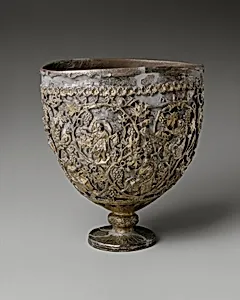
The Antioch "Chalice"
Unknown Artist
500–550
Medium
Silver, silver-gilt
Dimensions
Overall: 7 11/16 x 7 1/16 x 6 in. (19.6 x 18 x 15.2 cm) foot: 2 15/16 in. (7.4 cm)
Classification
Metalwork-Silver
Culture
Byzantine
Department
The Cloisters
Museum
Metropolitan Museum of Art, New York, NY
Credit
The Cloisters Collection, 1950
Accession Number
50.4
Rights
Public Domain
Tags
Art Historical Context
The Antioch "Chalice," created between 500 and 550 CE, stands as a remarkable example of early Byzantine metalwork. Crafted from silver and silver-gilt, this vessel measures just under eight inches tall and likely served a liturgical purpose in the Christian communities of Antioch, a thriving center of the Roman Empire. Its gilded surfaces would have caught the light during sacred rites, highlighting the skilled craftsmanship of anonymous Byzantine artisans who combined practical function with symbolic decoration. The chalice features intricate motifs including Christ, birds, animals, and clusters of grapes. These elements reflect the rich iconography of the period, where grapes often evoked the Eucharist and themes of spiritual abundance. Such works demonstrate how Byzantine artists wove Christian theology into everyday objects of worship, blending classical influences with emerging religious narratives. Today, this piece resides in the Metropolitan Museum’s Cloisters collection, offering visitors a tangible connection to the devotional practices of the sixth century. Its preservation allows modern audiences to appreciate the enduring artistry and cultural importance of Byzantine silverwork.