
The Assumption of the Virgin
1548–1612
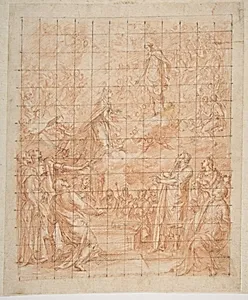
Medium
Red chalk, over charcoal, squared for transfer
Dimensions
8-11/16 x 7-1/16 in. (22.0 x 18.0 cm)
Classification
Drawings
Department
Drawings and Prints
Museum
Metropolitan Museum of Art, New York, NY
Credit
Rogers Fund, 1965
Accession Number
65.66.8
Rights
Public Domain
Tags
Art Historical Context
Bernardino Poccetti (1548–1612), a Florentine Mannerist painter, created *The Assumption of the Virgin* as a preparatory drawing, capturing the triumphant moment when the Virgin Mary ascends to heaven surrounded by angels—a central theme in Catholic iconography during the Counter-Reformation era. Active in late 16th-century Italy, Poccetti was renowned for his expansive fresco cycles in Tuscan churches, blending elegant figures with dramatic movement in the Mannerist tradition, which emphasized grace and complexity over Renaissance harmony. Executed in red chalk over charcoal on a modest 8-11/16 x 7-1/16 in. sheet, this work is squared for transfer, a practical technique artists used to enlarge sketches onto walls or canvases for frescoes or altarpieces. The subtle layering of media allowed Poccetti to refine contours and shading with precision, highlighting the swirling drapery and ethereal ascent that would animate larger commissions. Housed in the Metropolitan Museum of Art's Drawings and Prints department (Rogers Fund, 1965), this intimate study offers a window into the meticulous planning behind Poccetti's grand religious narratives, revealing how Renaissance workshops bridged imagination and execution.
About the Artist
Bernardino Poccetti · 1548–1612
Italian late Renaissance fresco painter, Florence. Comment on works: religious; in Pilkington he is credited with flower paintings