
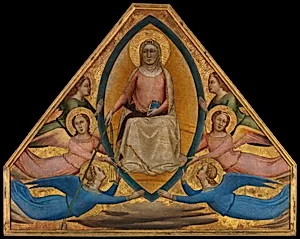
The Assumption of the Virgin
ca. 1337–39
Medium
Tempera on wood, gold ground
Dimensions
Framed: 44 1/2 × 56 1/8 × 2 3/4 in. (113 × 142.6 × 7 cm) without frame: 42 1/2 × 53 7/8 in. (108 × 136.8 cm)
Classification
Paintings
Department
Robert Lehman Collection
Museum
Metropolitan Museum of Art, New York, NY
Credit
Robert Lehman Collection, 1975
Accession Number
1975.1.58
Rights
Public Domain
Tags
Art Historical Context
Bernardo Daddi, a Florentine painter of the early 14th century, created *The Assumption of the Virgin around 1337–. This grand tempera panel depicts the biblical moment when the Virgin Mary is lifted into heaven by angels, a triumphant scene central to Christian devotion. Daddi, influenced by Giotto's naturalism yet rooted in Gothic elegance, fills the composition with graceful figures, swirling draperies, and a host of adoring angels, capturing the era's spiritual fervor amid Italy's burgeoning Renaissance. Painted in tempera on wood with a shimmering gold ground—a hallmark of Sienese-Florentine altarpieces—the work's luminous surface evokes divine glory. The gold leaf, meticulously punched and tooled, creates a heavenly radiance that draws viewers into the sacred narrative. At over 4 feet tall, its scale suggests it once adorned a church altar, serving as a focal point for worship. Housed in the Metropolitan Museum of Art's Robert Lehman Collection, this masterpiece highlights Daddi's mastery in blending narrative drama with refined detail, offering a window into 14th-century Tuscan piety and artistic innovation. Visitors will appreciate its ethereal beauty and the enduring mystery of Mary's ascent.
About the Artist
Bernardo Daddi · 1250–1360
Comment on works: religious