
The Bagpiper
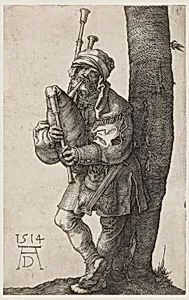
Medium
figures
Classification
figures
Department
Smithsonian Collection
Museum
Smithsonian American Art Museum
Credit
Smithsonian American Art Museum
Accession Number
1949-100-21
Rights
Public Domain
About this artwork
Research in Progress
Art Historical Context
Albrecht Dürer’s “The Bagpiper,” dated 1514, offers a compelling glimpse into the artist’s fascination with human figures during the height of the Northern Renaissance. A master German printmaker and painter active from 1471 to 1528, Dürer excelled at capturing the individuality and expressive potential of everyday subjects. This work, classified simply as figures and held in the Smithsonian American Art Museum, reflects his lifelong interest in rendering the human form with remarkable clarity and presence. Created at a time when Dürer was deeply engaged with both religious and secular themes, the piece invites viewers to consider the cultural role of music and itinerant performers in early sixteenth-century Europe. Though research on the work remains in progress, its presence in the Smithsonian collection underscores Dürer’s enduring influence on later generations of artists who sought to portray ordinary people with dignity and precision. The concise focus on a single musician allows modern audiences to appreciate Dürer’s ability to convey personality and narrative through posture and gesture alone, turning a fleeting moment into a timeless study of human experience.