
The Bather
Jean Antoine Houdon, ca. 1780 or 19th–early 20th century
About this artwork
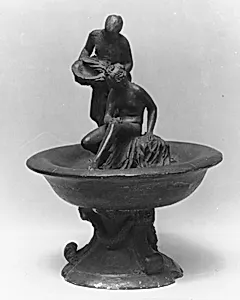
Jean-Antoine Houdon, a leading French sculptor of the Neoclassical period, is celebrated for his lifelike portrayals of the human form, blending classical ideals with remarkable realism. *The Bather*, a small terracotta sculpture from around 1780—or possibly a 19th- to early 20th-century work in his style—depicts a graceful female nude in a moment of intimate bathing. Measuring just 8 1/8 × 6 1/4 inches, this intimate piece captures the subject's poised contrapposto stance and subtle musculature, evoking the poised elegance of ancient Venus figures while showcasing Houdon's mastery of anatomy. Terracotta, a fired clay medium, was prized by sculptors like Houdon for preliminary models or bozzetti—small-scale studies that allowed experimentation before committing to marble or bronze. Its warm, earthy tone and textured surface lend *The Bather* a tactile vitality, highlighting the artist's skill in modeling soft flesh and flowing drapery with fingertip precision. Housed in the Metropolitan Museum of Art's European Sculpture and Decorative Arts department, this work reflects the Enlightenment-era fascination with the natural body and classical antiquity. As part of The Friedsam Collection, *The Bather* invites visitors to appreciate how such modest sketches influenced grand public monuments, bridging private studio practice with enduring cultural ideals of beauty and femininity.