
The Beheading of Saint Paul
1600-1625
Medium
Decorative Arts-Fiber
Classification
Decorative Arts-Fiber
Department
Smithsonian Collection
Museum
Smithsonian American Art Museum
Credit
Smithsonian American Art Museum, Gift of Mrs. Philip Coffin
Accession Number
1961.5.7
Rights
Public Domain
Tags
Art Historical Context
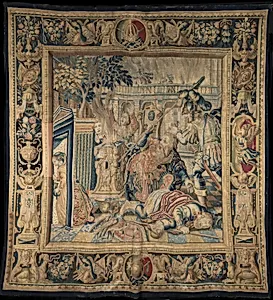
In the early 17th century, artisans crafted exquisite fiber works like *The Beheading of Saint*, a vivid tapestry from around 1600-1625 now housed in the Smithsonian American Art Museum.ributed to an unidentified Flemish master, this piece falls within the golden age of Northern European decorative arts, when workshops in cities like Brussels produced monumental textiles that brought biblical dramas to life. Woven with intricate threads, it captures the martyrdom of Saint Paul in ancient Rome, where Roman soldiers execute the apostle by beheading—a pivotal moment symbolizing faith's triumph over persecution. The scene draws from early Christian tradition, depicting Paul's death under Emperor Nero around 67 AD amid Rome's military might. Flemish fiber arts excelled in narrative storytelling, using rich dyes and detailed figural weaving to evoke emotion and piety during the Counter-Reformation era. These tapestries weren't just art; they adorned churches and noble homes, serving as visual sermons for the illiterate and enduring symbols of devotion. Today, this Smithsonian treasure—gifted by Mrs. Philip Coffin—highlights the fusion of artistry and spirituality, inviting us to ponder the courage of saints amid historical turmoil. Its tactile medium reminds us how everyday materials could immortalize sacred history.