
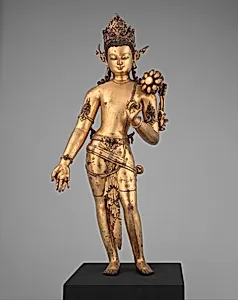
The Bodhisattva Padmapani Lokeshvara
Unknown Artist
11th–12th century
Medium
Copper alloy with gilding and semiprecious stones
Dimensions
H. 23 in. (58.4 cm); W. 10 1/2 in. (25.7 cm); D. 4 3/4 in. (12.1 cm)
Classification
Sculpture
Culture & Period
Nepal, Kathmandu Valley · Thakuri periods
Department
Asian Art
Museum
Metropolitan Museum of Art, New York, NY
Credit
Purchase, Bequests of Mary Clarke Thompson, Fanny Shapiro, Susan Dwight Bliss, Isaac D. Fletcher, William Gedney Beatty, John L. Cadwalader and Kate Read Blacque, Gifts of Mrs. Samuel T. Peters, Ida H. Ogilvie, Samuel T. Peters and H. R. Bishop, F. C. Bishop and O. M. Bishop, Rogers, Seymour and Fletcher Funds, and other gifts, funds and bequests from various donors, by exchange, 1982
Accession Number
1982.220.2
Rights
Public Domain
Tags
Art Historical Context
This elegant sculpture of the Bodhisattva Padmapani Lokeshvara was created in the Kathmandu Valley of Nepal during the 11th–12th century, under theakuri periods. As a central figure in Buddhist tradition, Padmapani—meaning “lotus-bearer”—embodies compassion, often shown holding a lotus flower to symbolize purity and enlightenment. The work reflects a time when the Kathmandu Valley served as a vibrant crossroads for Buddhist art and devotion, with local artisans producing refined metal images for temples and private worship. Crafted from copper alloy with gilding and inlaid semiprecious stones, the sculpture highlights the sophisticated metalworking techniques perfected in medieval Nepal. The gilding would have given the figure a radiant, golden appearance, while the stones added rich color and spiritual symbolism. Such materials were chosen not only for their beauty but also for their durability and sacred associations, making the piece both a devotional object and a testament to the region’s artistic excellence. Today housed in the Metropolitan Museum of Art’s Asian Art collection, this sculpture offers visitors a window into Nepal’s rich Buddhist heritage and the enduring appeal of bodhisattva imagery. Its balanced proportions and serene expression continue to convey the compassionate ideals central to Himalayan Buddhism.