
The Capture of Carthage
Giovanni Battista Tiepolo, 1725–29
About this artwork
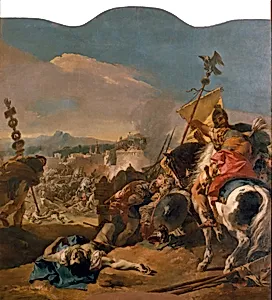
Giovanni Battista Tiepolo's *The Capture of Carthage* (1725–29) is a monumental oil on canvas that captures the dramatic fall of the ancient city during the Third Punic War in 146 BCE. Painted when Tiepolo was in his late twenties, this early masterpiece depicts Roman soldiers storming the North African stronghold, with dynamic figures of men, women, horses, and battling warriors filling the irregular 13-by-12-foot surface. Acquired by The Metropolitan Museum of Art through the Rogers Fund in 5, it exemplifies the Venetian master's flair for grand historical narratives. Tiepolo, a leading figure in the Rococo style, drew inspiration from predecessors like Paolo Veronese and Peter Paul Rubens, employing swirling compositions, vibrant colors, and theatrical lighting to convey chaos and triumph. The oversized canvas suggests it was designed for a palatial hall, immersing viewers in the epic clash that ended Carthage's power and solidified Roman dominance—a pivotal moment in Western history symbolizing imperial ambition. This work highlights Tiepolo's virtuosity in rendering movement and emotion, blending Baroque drama with emerging Rococo elegance. For visitors, it's a thrilling window into 18th-century Venice's love for heroic spectacle, reminding us how art immortalizes humanity's triumphs and tragedies.