
The Carney Cock
1931
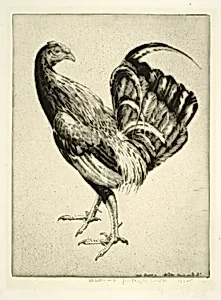
Medium
Graphic Arts-Print
Classification
Graphic Arts-Print
Department
Smithsonian Collection
Museum
Smithsonian American Art Museum
Credit
Smithsonian American Art Museum, Gift of Page Cross
Accession Number
1971.51
Rights
Public Domain
Tags
Art Historical Context
Behold *The Carney Cock* (1931), a charming graphic arts print by Emerson Tuttle now housed in the Smithsonian American Art Museum's collection Acquired as a gift from Page Cross, this work exemplifies early 20th-century American printmaking, a medium that allowed artists to reproduce intricate designs affordably during the Great Depression era. Tuttle captures the essence of a spirited rooster—tagged simply as "chicken"—in a style that likely draws from regional realism, highlighting everyday rural subjects with precise lines and textures typical of the period's graphic techniques. Created amid economic hardship, the artwork reflects a fascination with American farm life and vernacular imagery, where animals like roosters symbolized vitality, vigilance, and the rhythms of the countryside. Prints such as this were popular for their accessibility, bridging fine art with domestic decoration and storytelling. Tuttle's choice of subject invites viewers to appreciate the humble beauty in nature's bold personalities. As part of the Smithsonian's vast holdings, *The Carney Cock* offers a delightful glimpse into 1930s artistic expression, reminding us how simple motifs can evoke deeper cultural nostalgia. Next time you're here, linger on those feathers—they pack a punch!