
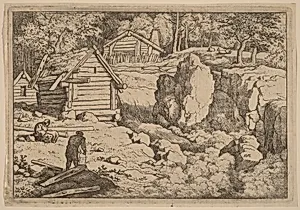
The Carpenter
probably c. 1645/1656
Medium
etching
Classification
Department
CG-E
Museum
National Gallery of Art, Washington, D.C.
Credit
Ailsa Mellon Bruce Fund
Accession Number
1973.15.94
Rights
Public Domain
Art Historical Context
Allart van Everdingen's *The Carpenter*, an etching likely created between 1645 and 1656, captures the essence of 17th-century Dutch Golden artistry. Van Everdingen (1621–1675), a versatile Dutch painter and printmaker, is best known for his dramatic Nordic landscapes inspired by travels to Sweden and Norway. Yet this intimate print shifts focus to everyday labor, portraying a carpenter in a moment of focused craftsmanship—a nod to the era's fascination with ordinary tradespeople amid Holland's booming economy and rising middle class. Etching, van Everdingen's favored medium here, allowed for intricate lines and rich tonal contrasts, etched into a copper plate with acid for reproducible detail. This technique democratized art, making high-quality images accessible beyond oil paintings. The work exemplifies the Dutch mastery of printmaking, blending realism with subtle narrative, where tools and posture evoke diligence and skill. Housed in the National Gallery of Art thanks to the Ailsa Mellon Bruce Fund, *The Carpenter* invites us to appreciate the unsung heroes of history. It reminds visitors how 17th-century artists elevated the mundane, turning workshops into windows on human endeavor.
About the Artist
Allart van Everdingen · 1621–1675
Allaert van Everdingen (1621-1675) was a Dutch Golden Age painter and printmaker who introduced Scandinavian landscape painting to the Netherlands. Born in Alkmaar and baptized on June 18, 1621, he pioneered a distinctive genre of Nordic mountain scenery that profoundly influenced Dutch landscape painting and later inspired the Romantic movement. Van Everdingen holds a unique place in art history...