
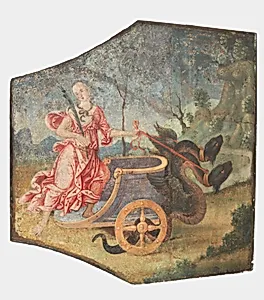
The Chariot of Ceres
ca. 1509
Medium
Fresco, transferred to canvas and attached to wood panels
Dimensions
Overall: 31 × 30 1/8 in. (78.7 × 76.5 cm)
Classification
Paintings-Decorative
Culture
Italian, Umbria
Department
European Sculpture and Decorative Arts
Museum
Metropolitan Museum of Art, New York, NY
Credit
Rogers Fund, 1914
Accession Number
14.114.8
Rights
Public Domain
Tags
Art Historical Context
Behold *The Chariot of C*, a vibrant fresco by the Umbrian Renaissance master Pinturicchio, created around 1509. Originally painted directly onto plaster walls, this work was carefully transferred to canvas and mounted on wood panels, preserving its luminous colors and intricate details for modern viewers. Measuring about 31 by 30 inches, it exemplifies the decorative fresco tradition of Renaissance Italy, where such pieces adorned palaces, chapels, and furniture like cassoni (wedding chests). The scene captures the Roman goddess Ceres, deity of agriculture and fertility, riding triumphantly in her chariot, likely drawn by mythical dragons—a nod to classical mythology where serpentine creatures symbolize earth's fertile mysteries. Pinturicchio's style shines in his meticulous attention to mythological narrative, rich gilding, and playful details, blending Umbrian lyricism with the grandeur of High Renaissance decoration. This panel reflects the era's revival of antiquity, commissioned for elite settings to evoke abundance and divine favor. Housed in the Metropolitan Museum of Art's European Sculpture and Decorative Arts department (Rogers Fund, 1914), *The Chariot of Ceres* invites us to marvel at Pinturicchio's skill in transforming sacred walls into storytelling tapestries, bridging ancient myths with Renaissance splendor.