
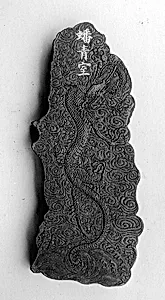
The Creeping Green Room
late 19th–early 20th century
Medium
Black ink
Dimensions
W. 1 3/8 in. (3.5 cm); L. 3 3/8 in. (8.6 cm)
Classification
Ink
Culture & Period
China · late Qing dynasty (1644–1911) or early Republic period (1912–49)
Department
Asian Art
Museum
Metropolitan Museum of Art, New York, NY
Credit
Rogers Fund, 1930
Accession Number
30.76.240
Rights
Public Domain
Tags
Art Historical Context
*The Creeping Green Room* is a delicate ink work by Jian Guzhai, created during the late Qing dynasty1644–1911) or early Republic period (2–1949) in China. Measuring just 1⅜ × 3⅜ inches (3.5 × 8.6 cm), this intimate piece exemplifies the precision of Chinese ink art, likely a seal impression or rubbing rendered in black ink. Acquired through the Rogers Fund in 0, it resides in the Metropolitan Museum of's Asian Art Department, inviting close contemplation of its subtle details. The title evokes a poetic, atmospheric scene, with dragons—powerful symbols of imperial authority, good fortune, and cosmic energy—featured prominently, as suggested by its tags. In Chinese culture, dragons were revered motifs, especially during the Qing era, blending mythology with literati elegance. Jian Guzhai's mastery of ink techniques highlights the era's shift from imperial grandeur to more personal expressions amid political upheaval, including the dynasty's fall and the Republic's birth. This tiny artwork captures the transitional spirit of late imperial China, where compact forms like seals carried profound cultural weight, serving as signatures on scrolls or stamps of identity. Visitors are drawn to its mystical allure, a window into the enduring artistry of dragon lore.
About the Artist
Jian Guzhai
Jian Guzhai — meaning roughly "Studio for Appreciating the Antique" — was a renowned ink-tablet workshop operated by the Wang Jinsheng family in the Huizhou region of Anhui Province, China, one of the historic centers of fine inkstick production. Active during the late Qing dynasty (1644–1911) and possibly into the early Republic period (1912–49), the workshop was celebrated for producing ink tabl...