
The Crucifixion
Bartolomé Estebán Murillo, ca. 1675
About this artwork
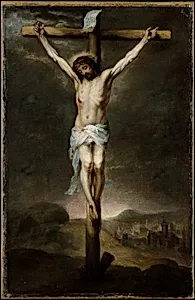
Bartolomé Esteban Murillo's *The Crucifixion painted around 1675, is a poignant oil-on-canvas work measuring just 20 x 13 inches, making it an intimate devotional piece suited for private prayer or personal altars. Housed in the Metropolitan Museum of Art European Paintings department, this small-scale masterpiece exemplifies the Spanish Baroque master's ability to infuse profound religious themes with emotional tenderness and luminous realism. Murillo, leading figure of Seville's Golden Age, drew from the Counter-Reformation's emphasis on evocative imagery to stir devotion. His Crucifixion scenes, like this one, depart from harsher, more graphic depictions by focusing on Christ's serene suffering, with soft modeling of flesh, dramatic chiaroscuro lighting, and ethereal skies that evoke divine compassion. The velvety brushwork and glowing highlights—hallmarks of his style—influence from Venetian colorists like Titian, blend Italian grandeur with Spanish piety. This bequest from Harry G. Sperling in 1971 invites visitors to contemplate the universal mystery of sacrifice, reminding us of Murillo's enduring legacy in blending spiritual depth with painterly beauty.