
The Crucifixion
1481–82
Medium
Tempera on parchment
Dimensions
6 5/8 x 4 13/16 in. (16.8 x 12.2cm)
Classification
Manuscripts and Illuminations
Culture
German, possibly Mainz and/or Cologne
Department
Robert Lehman Collection
Museum
Metropolitan Museum of Art, New York, NY
Credit
Robert Lehman Collection, 1975
Accession Number
1975.1.2479
Rights
Public Domain
Tags
Art Historical Context
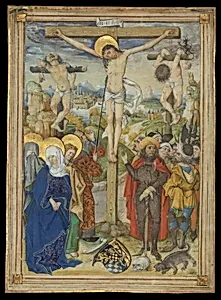
Created around 1481–82 by the Housebook Master, an enigmatic German artist active in the Rhineland, this Crucifixion scene exemplifies the refined devotional art of late medieval Europe. Painted in tempera on parchment, the small illumination—measuring just over six inches high—likely formed part of a personal prayer book or manuscript. Its delicate scale and luminous surface invite close, private contemplation, a hallmark of Northern European religious imagery at the close of the fifteenth century. The Housebook Master worked during a pivotal moment when Gothic traditions began to merge with emerging Renaissance sensibilities. His figures display expressive gestures and naturalistic details, while the parchment support and tempera medium allowed for luminous color and fine line work that enhanced the emotional resonance of the sacred narrative. Elements such as the skulls at Golgotha and the presence of dogs add layers of symbolic meaning common in German Passion imagery, grounding the scene in both theological significance and everyday observation. Housed in the Metropolitan Museum’s Robert Lehman Collection, this work offers modern viewers a window into the personal piety of late medieval Germany, where art served as a bridge between the divine and the individual believer.