
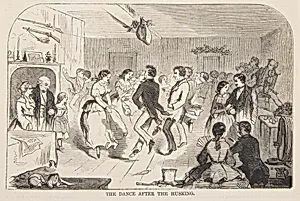
The Dance after the Husking
November 13, 1858
Medium
figures
Classification
figures
Department
Smithsonian Collection
Museum
Smithsonian American Art Museum
Credit
Gift of John Goldsmith Phillips, Jr.
Accession Number
1947-4-36
Rights
Public Domain
About this artwork
Research in Progress
Art Historical Context
**The Dance after the Husking** *Winslow Homer (American, 1836–1910), November 13, 1858* Created early in Winslow Homer's career, *The Dance after the Husking* captures a joyful moment from rural American life in the mid-19th century. At just 22 years old, Homer was honing his skills as an illustrator, often depicting everyday scenes for magazines like *Harper's Weekly*. This work, classified among figures in the Smithsonian American Art Museum's collection, likely sketches the lively celebration following a "husking bee"—a communal corn-husking event where neighbors gathered for work, food, and dancing, reflecting antebellum agrarian traditions. Homer's realistic style, even in these early studies, foreshadows his mastery of American Realism, emphasizing natural poses and unvarnished humanity. Though the medium is noted simply as "figures," it hints at preparatory drawings or engravings that bridged his lithography apprenticeship to later oil paintings of coastal and rural vignettes. A gift from John Goldsmith Phillips, Jr., to the Smithsonian Collection, the piece offers a window into 1850s New England folkways, blending labor and leisure in a quintessentially American ritual. Research continues on this evocative work, underscoring Homer's enduring appeal as a chronicler of the nation's spirit. (198 words)