
The Death of Aeschylus
Tobias Verhaecht, 1576–before 1606
About this artwork
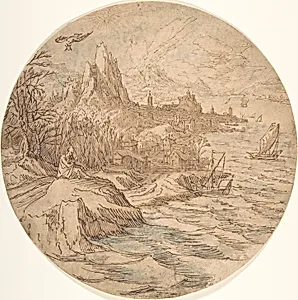
In the collection of the Metropolitan Museum of, Tobias Verhaecht's *The Death of Aesch* (ca. 1576–before 1606) captivates with its intimate scale and circular format—a tondo sheet measuring just over 10 inches in diameter Created with pen and brown ink heightened by brown and blue wash this Flemish drawing exemplifies the meticulous techniques of late 16th-century Antwerp. Verhaecht a specialist in landscapes and teacher to Peter Paul Rubens, employed wash to evoke atmospheric depth, layering translucent blues and browns over precise ink lines to suggest expansive vistas. The work illustrates the legendary demise of Aeschylus, the ancient Greek tragedian, weaving in vivid landscape elements with figures of men and boats. This mythological subject, rooted in classical lore, allowed Verhaecht to showcase his mastery of narrative within natural settings—rolling hills, watery expanses, and human drama rendered with dynamic energy. The circular composition draws the eye inward, mirroring the fateful convergence of the tale. As a standalone drawing rather than a preparatory study, it highlights the rising status of draftsmanly works in Renaissance Northern Europe, blending storytelling with topographic precision. A generous anonymous gift in 2005, it invites visitors to ponder how 16th-century artists reimagined antiquity amid their own era's explorations.