
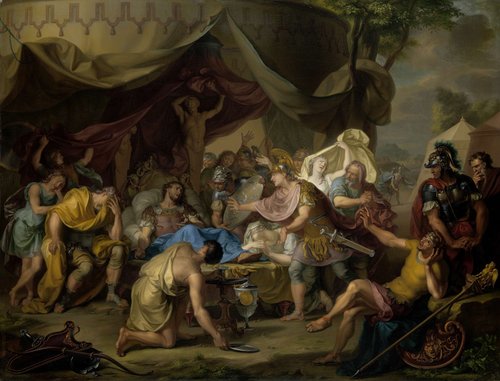
The Death of Epaminondas
1726
Medium
oil on panel
Dimensions
80; 61
Rights
Public Domain
About this artwork
inscription: ‘Aº 1738 op de verkoping van Leyden is dit schilderij door Gildemeester gekocht voor 1200,- guldens en kosten de Heer Locquet op de verkoping van Walraven 1560 guld. Aº 1800 verkogt ...’
Art Historical Context
### The Death of EpaminondasIsaac Walraven's *The Death of Epamin* (1726), an oil-on-panel painting measuring 61 x 80 cm, captures poignant moment from ancient Greek history. Epaminondas, the brilliant Theban general who revolutionized warfare with his innovative tactics at the Battle of Leuctra (371 BC), is depicted in his final moments at the Battle of Mantinea in 362 BC. Wounded by a Spartan spear, he refused treatment until confirming Theban victory, embodying stoic heroism—a theme popular in 18th-century history paintings that drew from classical antiquity to inspire moral virtue. Painted in the Dutch tradition of intimate cabinet pictures on panel, Walraven's work showcases meticulous oil techniques for dramatic lighting and emotional depth, evoking the legacy of Rembrandt while reflecting the Rococo era's refined elegance. Housed in the Rijksmuseum, this piece highlights the enduring appeal of mythological and historical subjects in Dutch art, bridging Golden Age realism with Enlightenment ideals. Its provenance adds intrigue: an inscription notes its 1738 purchase at a Leiden auction by Gildemeester for 1,200 guilders, and later acquisition by Locquet at Walraven's 1800 sale for 1,560 guilders—testifying to its high value among collectors and its journey through elite Dutch circles. A gem for visitors exploring classical drama in miniature scale.