
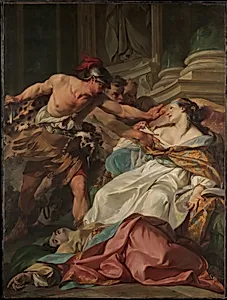
The Death of Harmonia
ca. 1740–41
Medium
Oil on canvas
Dimensions
77 1/2 x 58 1/4 in. (196.9 x 148 cm)
Classification
Paintings
Department
European Paintings
Museum
Metropolitan Museum of Art, New York, NY
Credit
Gift of Mr. and Mrs. Harry N. Abrams, by exchange, 1969
Accession Number
69.129
Rights
Public Domain
Tags
Art Historical Context
Jean-Baptiste Marie Pierre's *The Death of Harmonia (ca. 1740–41) captivates with its dramatic depiction of a mythological moment, rendered in lush oil on canvas. This-scale work, measuring nearly 78 by 58 inches, portrays the poignant death of Harmonia, the Greek goddess of harmony concord, surrounded by figures conveying grief and mortality—themes hinted at in its tags of men, women, and. Pierre, a prominent French Rococo artist trained at the Académie Royale, excelled in history painting, blending elegance with emotional intensity. Created during the opulent Rococo era in mid-18th-century France, the painting reflects the period's fascination with classical mythology, ornate compositions, and theatrical lighting. Pierre's fluid brushwork and vibrant colors evoke movement and pathos, drawing viewers into the scene's intimacy despite its grand dimensions. As a young artist vying for royal patronage, he infused such works with the decorative flair favored by Versailles elites. Today, this masterpiece graces the Metropolitan Museum of Art, a 1969 gift celebrating European painting traditions. It invites reflection on harmony's fragility, reminding us how 18th-century artists humanized ancient tales to explore universal emotions.