
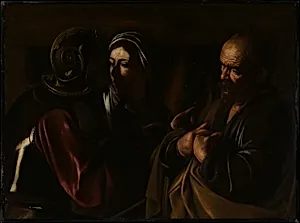
The Denial of Saint Peter
Medium
Oil on canvas
Dimensions
37 x 49 3/8 in. (94 x 125.4 cm)
Classification
Paintings
Department
European Paintings
Museum
Metropolitan Museum of Art, New York, NY
Credit
Gift of Herman and Lila Shickman, and Purchase, Lila Acheson Wallace Gift, 1997
Accession Number
1997.167
Rights
Public Domain
Tags
Art Historical Context
In the dim glow of Caravaggio's *The Denial of Saint Peter (1610), we witness one of the Bible's most poignant moments: Saint Peter, the future leader of the apostles, denying his association with Jesus three times as servant woman and a soldier confront him by firelight. Painted in oil on canvas during Caravaggio's turbulent final years in Naples, this work captures the raw humanity of betrayal and remorse. The artist's mastery of tenebrism—extreme contrasts of light and shadow—draws our eyes to Peter's weathered face, illuminated against the encroaching darkness, heightening the emotional drama. A cornerstone of Baroque art, Caravaggio revolutionized European painting with his unflinching realism, using ordinary people as models for sacred figures rather than idealized saints. Here, the 37 x 49 3/8-inch canvas pulses with psychological tension: Peter's gesturing hand, the woman's accusing point, and the soldier's armored presence evoke immediacy and introspection. This technique influenced generations, from Rembrandt to Velázquez, bridging religious devotion with visceral storytelling. Acquired by The Metropolitan Museum of Art in 1997 through generous gifts, this masterpiece invites visitors to ponder themes of frailty and forgiveness that resonate across centuries. Step closer—the flickering light almost warms the canvas.