
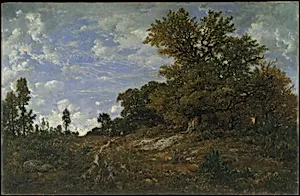
The Edge of the Woods at Monts-Girard, Fontainebleau Forest
Théodore Rousseau, 1852–54
About this artwork
Step into the lush embrace of Fontainebleau Forest with Théodore Rousseau's *The Edge of the Woods Monts-Girard, Fontainebleau Forest*1852–54), a masterful oil on wood that captures the wild beauty of this iconic French woodland. As a leading figure of the Barbizon school, rejected the polished idealism of academic art, instead embracing plein-air realism to depict nature's untamed vitality. Painted during his most productive years near the forest he adored, this panoramic landscape (31½ × 48 inches) draws viewers to the forest's shadowy fringe, where sunlight pierces dense foliage and underbrush teems with life. Rousseau's textured brushwork—layered thickly on the wooden panel—brings a tactile depth, evoking the rough bark, tangled roots, and dappled light that defined Barbizon innovation. This medium allowed for intricate detailing and durability, highlighting his obsession with atmospheric effects and seasonal moods. The work's horizontal format immerses us in the scene, underscoring the school's influence on Impressionism. Acquired through the Catharine Lorillard Wolfe Collection in 1896, this painting at the Metropolitan Museum of Art exemplifies Rousseau's enduring legacy: a celebration of nature's raw poetry that inspired generations to see the everyday sublime.