
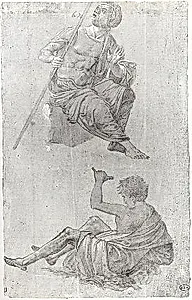
The Flagellation
early 16th century
Medium
Metalpoint, brush and gray wash, touches of white, on gray prepared paper
Dimensions
11 x 6 15/16 in. (27.9 x 17.6 cm)
Classification
Drawings
Culture
Italian (Veneto)
Department
Robert Lehman Collection
Museum
Metropolitan Museum of Art, New York, NY
Credit
Robert Lehman Collection, 1975
Accession Number
1975.1.374
Rights
Public Domain
Tags
Art Historical Context
This delicate drawing, *The Flagellation*, hails from early 16th-century Veneto Italy, a vibrant hub of Renaissance artistry influenced by masters like Giovanni Bellini and early Titian. Attributed to an anonymous Venetian, it captures the biblical scene of Christ's scourging, a poignant moment from the Passion emphasizing suffering and redemption. Rendered on modest gray prepared paper (11 x 6 15/16 in.), its intimate scale suggests it may have served as a preparatory study for a larger painting or altarpiece, common in workshops of the time. The artist's virtuoso use of metalpoint—likely silverpoint for its fine, precise lines—combined with brush and gray wash and subtle white heightening, creates a masterful monochrome effect. This technique, rooted in northern Italian traditions, allows for subtle tonal modeling and dramatic chiaroscuro, evoking the emotional intensity of Christ's torment amid tormentors. Such drawings were prized for their technical finesse, bridging sketch and finished work. Now in the Robert Lehman Collection at The Metropolitan Museum of Art (1975), this piece exemplifies Veneto's refined draftsmanship during the High Renaissance, offering visitors a window into the devotional art that shaped European spirituality.