
The Flutist
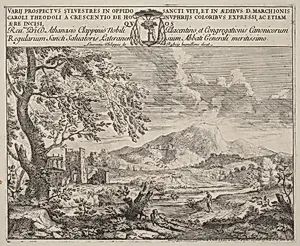
Medium
etching
Dimensions
plate: 24.7 x 30 cm (9 3/4 x 11 13/16 in.) sheet: 31.7 x 39 cm (12 1/2 x 15 3/8 in.)
Classification
Department
CG-E
Museum
National Gallery of Art, Washington, D.C.
Credit
Ailsa Mellon Bruce Fund
Accession Number
1985.3.7
Rights
Public Domain
Art Historical Context
"The Flutist," etching created by Crescio Onofri 1696, captures moment of quiet musical expression through its delicate lines and tonal contrasts. Measuring 24.7 by 30 cm on the plate, this print exemplifies the intimate scale often favored in works on paper, allowing viewers to appreciate fine details up close. As a classified print in the National Gallery of Art’s collection, acquired through the Ailsa Mellon Bruce Fund, it represents the lasting value of reproducible art forms from the late seventeenth century. Etching, the medium employed here, involves coating a metal plate with a resist, drawing through it, and using to create grooves that hold ink. This technique enabled artists to achieve precise, lines that translated fluidly from drawing to print, making such works accessible beyond the original plate. Onofri’s choice of subject—a solitary flutist—suggests an interest in everyday or pastoral themes that resonated with audiences of the period. Prints like this one played an important cultural role in disseminating artistic ideas across Europe, bridging painting traditions with a broader public. Today, it offers museum visitors a window into the technical and aesthetic priorities of its time, highlighting music as a recurring motif in visual art.
About the Artist
Crescenzio Onofri · 1632–1712
Comment on works: Landscapes