
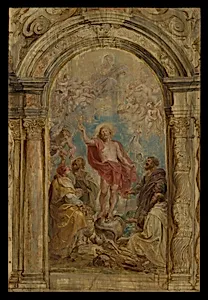
The Glorification of the Eucharist
ca. 1630–32
Medium
Oil on wood
Dimensions
28 1/8 in. × 19 in. (71.4 × 48.2 cm)
Classification
Paintings
Department
European Paintings
Museum
Metropolitan Museum of Art, New York, NY
Credit
Bequest of Ogden Mills, 1929
Accession Number
37.160.12
Tags
About this artwork
This paintings titled "The Glorification of the Eucharist" by Peter Paul Rubens dates to ca. 1630–32. Executed in oil on wood, this work exemplifies the craftsmanship associated with European Paintings. The piece demonstrates the technical skill and artistic vision characteristic of its period. The work's presence in a major museum collection attests to its significance in the broader narrative of art history. As part of institutional holdings, it serves both scholarly research and public educat...
Art Historical Context
Peter Paul Rubens, the preeminent Flemish Baroque master, created *The Glorification of the Eucharist* around 1630–32, during the height of the Counter-Reformation This oil on wood panel, measuring just 28⅛ × 19 inches, exemplifies Rubens' virtuosic technique in smaller-scale works, often oil sketches or modelli used to plan larger commissions. His signature style—vibrant colors, dramatic chiaroscuro, and swirling compositions—brings religious fervor to life, serving the Catholic Church's mission to inspire devotion through art. The painting celebrates the Eucharist as the triumphant sacramen...
About the Artist
Peter Paul Rubens · 1577–1640
Peter Paul Rubens (1577-1640) stands as the most influential artist of the Flemish Baroque tradition and the greatest exponent of Baroque painting's dynamism, vitality, and sensuous exuberance. Born in Siegen, Westphalia, and raised in Antwerp, Rubens received a humanist education studying Latin and classical literature before pursuing artistic training under three masters: Tobias Verhaecht, Adam ...