
The "Grate" Token
Unknown Artist
1795
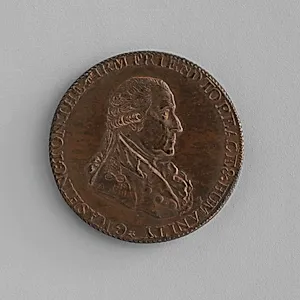
Medium
Bronze, struck
Dimensions
Diameter: 1 1/8 in. (29 mm.)
Classification
Coins
Culture
British
Department
European Sculpture and Decorative Arts
Museum
Metropolitan Museum of Art, New York, NY
Credit
Gift of Mr. and Mrs. Frederick S. Wait, 1907
Accession Number
07.124.18
Rights
Public Domain
Tags
Art Historical Context
Nestled in the Metropolitan Museum of Art's Department of European Sculpture and Decor Arts, *The "Grate"* is a diminutive bronze medalet struck in 1795 by an British artist. Measuring just 1 1/8 inches (29 mm) in diameter this coin-like object exemplifies the artistry of small-scale numismatics, where intricate designs are hammered into metal using engraved dies for sharp, raised relief. Its classification as a "coin" highlights tokens' role as non-legal tender pieces, often traded locally or used for commentary. Dated to the turbulent post-Revolutionary era, the token features a profile of George Washington, the iconic first U.S. President, rendered in classical style amid Britain's lingering tensions with its former colonies. The playful title—"Grate" in quotes—likely puns on "great," suggesting satirical intent, a common trope in 18th-century British tokens that poked fun at American leaders. Gifted to the Met in 1907 by Mr. and Mrs. Frederick S. Wait, it captures a moment of transatlantic cultural exchange. Artistically, the struck bronze technique allowed for precise detailing in profiles and motifs, blending sculpture's finesse with decorative utility. This piece invites visitors to ponder how everyday objects like tokens preserved political wit and portraiture, bridging history and craftsmanship in a single, pocket-sized relic.