
The Green and Remote (Small)? Hall
late 19th–early 20th century
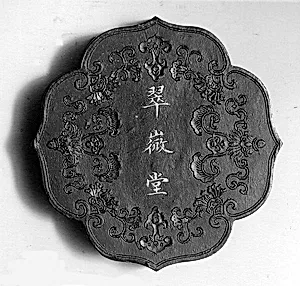
Medium
Black ink
Dimensions
W. 2 3/8 in. (6 cm); L. 2 7/16 in. (6.2 cm)
Classification
Ink
Culture & Period
China · late Qing dynasty (1644–1911) or early Republic period (1912–49)
Department
Asian Art
Museum
Metropolitan Museum of Art, New York, NY
Credit
Rogers Fund, 1930
Accession Number
30.76.259
Rights
Public Domain
Art Historical Context
This intimate work, *The Green and Remote (Small) Hall* by Jian Guzhai, dates to the late Qing dynasty or early Republic period, a time of political upheaval and cultural transition in China. Created in black ink on a remarkably small scale—just over two inches across—the piece likely formed part of an album leaf or personal collection, inviting close, contemplative viewing typical of literati traditions. Such miniature formats allowed scholars and artists to capture poetic ideas of seclusion and natural harmony within a modest space. The title evokes a quiet garden pavilion or studio, a recurring motif in Chinese art symbolizing retreat from worldly concerns. Jian Guzhai’s use of pure ink suggests a focus on brushwork and tonal variation rather than color, aligning with centuries-old practices that valued spontaneity and expressive line. Acquired by the Metropolitan Museum in 1930 through the Rogers Fund, the work offers modern visitors a glimpse into the refined aesthetic sensibilities that persisted amid China’s modernization. Its diminutive size underscores the Chinese appreciation for art that rewards careful examination, transforming a tiny surface into a vast imaginative landscape.
About the Artist
Jian Guzhai
Jian Guzhai — meaning roughly "Studio for Appreciating the Antique" — was a renowned ink-tablet workshop operated by the Wang Jinsheng family in the Huizhou region of Anhui Province, China, one of the historic centers of fine inkstick production. Active during the late Qing dynasty (1644–1911) and possibly into the early Republic period (1912–49), the workshop was celebrated for producing ink tabl...