
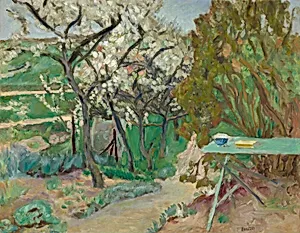
The Green Table
c. 1910
Medium
oil on canvas
Dimensions
overall: 51 x 65 cm (20 1/16 x 25 9/16 in.) framed: 77 x 90.5 x 9.5 cm (30 5/16 x 35 5/8 x 3 3/4 in.)
Classification
Painting
Department
CMC
Museum
National Gallery of Art, Washington, D.C.
Credit
Ailsa Mellon Bruce Collection
Accession Number
1970.17.7
Rights
Public Domain
Art Historical Context
Pierre Bonnard’s *The Green Table* (c. 1910) captures the quiet poetry of everyday domestic life that defined much of the artist’s work. A leading figure among the Nabis and a key Post-Impressionist painter, Bonnard favored intimate interiors over grand narratives, transforming ordinary rooms into luminous, color-rich spaces. Painted in oil on canvas, the medium allowed him to build subtle layers of pigment that glow with warmth and texture, inviting viewers to linger over the play of light across a simple tabletop. Created during a period when Bonnard was exploring bolder color harmonies and flattened perspectives, the work reflects the early twentieth-century shift toward subjective vision in art. Rather than precise description, Bonnard offers an emotional impression of a familiar scene, where the vibrant green surface becomes both anchor and focal point. Now in the National Gallery of Art’s collection as part of the Ailsa Mellon Bruce gift, *The Green Table* continues to charm visitors with its gentle celebration of private moments and its masterful handling of color and light.
About the Artist
Pierre Bonnard · 1867–1947
Pierre Bonnard (1867–1947) was a French painter and printmaker who became a leading figure in the Post-Impressionist movement and a founding member of Les Nabis. Born on October 3, 1867, in Fontenay-aux-Roses, France, Bonnard initially studied law at his father's insistence, graduating and briefly practicing as a barrister in 1888. However, his true passion lay in art, and he had simultaneously at...