
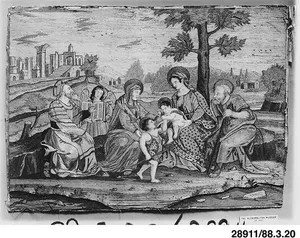
The Holy Family
late 17th century
Medium
Silk on cardboard
Dimensions
L. 17 1/2 x W. 24 inches (44.5 x 61 cm)
Classification
Textiles-Embroidered
Culture
Italian, Lecce
Department
European Sculpture and Decorative Arts
Museum
Metropolitan Museum of Art, New York, NY
Credit
Gift of Coudert Brothers, 1888
Accession Number
88.3.20
Rights
Public Domain
Tags
Art Historical Context
Behold *The Holy Family*, a delicate embroidered textile created by Leonardus Quesi late 17th-century Lecce, Italy. Measuring 17½ by 24 inches, this silk-on-cardboard work exemplifies the intricate craftsmanship of southern Italian decorative arts during the Baroque era. Acquired by the Metropolitan Museum of Art as a from Coudert Brothers 1888, it in the European Sculpture andative Arts department, highlighting the fusion of fine textiles with religious iconography. The composition centers on the Virgin Mary cradling the infant Jesus, surrounded by saints and angels—a timeless motif in Catholic devotion that gained renewed emphasis during the Counter-Reformation. Lecce, a hub of opulent Baroque artistry known for its carved stone facades, likely influenced Quesi's lavish stitching, where shimmering silk threads capture ethereal glows and rich drapery. Embroidered textiles like this served both as altarpieces and domestic pious objects, blending utility with spiritual depth. This piece invites reflection on the era's artistic virtuosity: the painstaking needlework on a sturdy cardboard support ensured durability while allowing vibrant colors and fine details to shine. A testament to Lecce's cultural heritage, it offers visitors a intimate glimpse into 17th-century Italian faith and finesse.