
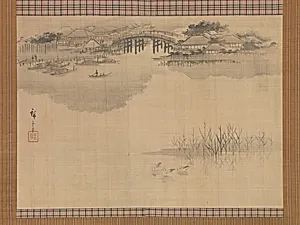
The Imado Bridge at the Foot of Mount Matsuchi
Utagawa Hiroshige, 19th century
About this artwork
Utagawa Hiroshige1797–1858), one of Japan's most celebrated ukiyo-e masters, captures the serene beauty of everyday landscapes in *The Imado Bridge at Foot of Mount Matsuchi Created in the 19th century during the period (1615–8), this hanging scrollmeasuring 16⅜ × 22⅝ inches and rendered in ink and color silk—depicts a riverside scene with the graceful arch of the Imado Bridge gentle boats on the water, and the looming presence of Mount Matsuchi. Hiroshige's signature style, known for its atmospheric depth and poetic sensitivity to nature, transforms this humble vista into a timeless evocation of Japan's natural harmony. Hanging scrolls like this were prized in Edo-era Japan for their portability and ritual display during tea ceremonies or festivals, unrolled to immerse viewers in fleeting moments of beauty. Hiroshige, famed for woodblock print series such as *The Fifty-three Stations of the Tōkaidō*, brought his masterful use of subtle color gradients and misty perspectives to painting, emphasizing the interplay of human activity and the environment. This work reflects the ukiyo-e tradition's celebration of the "floating world"—ephemeral pleasures amid urban and rural life. Now part of the Metropolitan Museum of Art's Harry G. C. Packard Collection, it invites us to pause and appreciate the quiet poetry of a bygone era's waterways.