
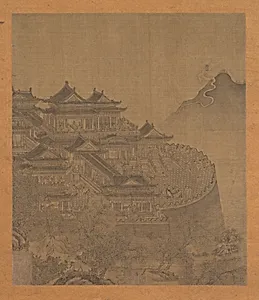
元 佚名 倣夏永 呂洞賓過岳陽樓 冊頁|明 佚名 呂洞賓過岳陽樓圖 冊頁|The Immortal Lü Dongbin Appearing over the Yueyang Pavilion
15th–16th century
Medium
Album leaf; ink on silk
Dimensions
Image: 8 5/8 x 7 3/8 in. (21.9 x 18.7 cm)
Classification
Paintings
Culture & Period
China · Ming dynasty (1368–1644)
Department
Asian Art
Museum
Metropolitan Museum of Art, New York, NY
Credit
From the Collection of A. W. Bahr, Purchase, Fletcher Fund, 1947
Accession Number
47.18.41
Rights
Public Domain
Tags
Art Historical Context
This delicate album leaf, painted in ink on silk during China's Ming dynasty (15th16th century), captures the mythical moment when Lü Dongbin—one of the beloved Eight Immortals of Daoism—appears ethereally over the iconic Yueyang Pavilion. The unidentified artist, possibly imitating the Yuan dynasty master Xia Yong as suggested by the title, renders misty mountains and the pavilion's elegant silhouette with fluid, expressive brushstrokes. Measuring just 8⅝ × 7⅜ inches, this intimate format invites close contemplation, typical of Chinese album leaves designed for scholars and collectors to savor in private study. In Ming-era painting, such works blended literati ideals with Daoist spirituality, emphasizing harmony between immortals and nature. Lü Dongbin, often shown as a sword-wielding wanderer granting blessings, symbolizes enlightenment and longevity, resonating deeply in popular folklore and temple art. The Yueyang Pavilion, perched on Dongting Lake and immortalized in Fan Zhongyan's 11th-century essay, evokes themes of loyalty and melancholy amid scenic grandeur. From A. W. Bahr's collection at The Metropolitan Museum of Art, this leaf exemplifies the refined "literati" style—sparse yet evocative—highlighting silk's luminous texture for subtle ink gradations. A window into Ming cultural devotion to the divine. (198 words)