
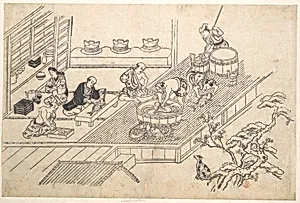
The Kitchen of a Joroya.
ca. 1680
Medium
Woodblock print; ink and color on paper
Dimensions
10 1/8 x 15 1/5 in. (25.7 x 38.6 cm)
Classification
Prints
Culture & Period
Japan · Edo period (1615–1868)
Department
Asian Art
Museum
Metropolitan Museum of Art, New York, NY
Credit
Gift of Estate of Samuel Isham, 1914
Accession Number
JP810
Rights
Public Domain
Tags
Art Historical Context
Hishikawa Moronobu *The Kitchen of a Jor* (ca. 1680) offers a vivid glimpse into everyday life during Japan's Edo period (16151868). As one of the earliest masters of ukiyo-e—"pictures of the floating world"—onobu pioneered woodblock printing techniques that captured the bustling energy of urban Edo (modern Tokyo). This ink and color print on paper, measuring just over 10 by 15 inches, exemplifies skill in depicting ordinary scenes with remarkable detail and vibrancy. The composition centers on a busy kitchen in a joroya, likely a fish shop or eatery, where men and women labor intently. Figures prepare fresh fish amid pots, knives, and hanging utensils, highlighting the vital role of food preparation in Edo's thriving merchant culture. Such intimate domestic views were novel, shifting ukiyo-e from elite subjects to relatable snapshots of working-class life, making art accessible to a broad audience through affordable prints. Moronobu's innovative use of multiple woodblocks for layering colors brought a new dynamism to Japanese printmaking, influencing generations of artists like those in the later ukiyo-e golden age. Donated to the Metropolitan Museum of Art in 1914, this piece invites us to savor the rhythms of pre-modern Japan, where even a humble kitchen pulsed with purpose and community.
About the Artist
Hishikawa Moronobu 菱川師宣 (Japanese) · 1618 –1694
Japanese, 1618–1694