
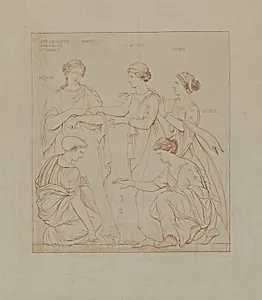
The Knucklebone Players, Herculaneum
Medium
Graphic Arts-Print
Classification
Graphic Arts-Print
Department
Smithsonian Collection
Museum
Smithsonian American Art Museum
Credit
Smithsonian American Art Museum, Gift of Mrs. Nigel Cholmeley-Jones
Accession Number
1967.54.67
Rights
Public Domain
Tags
Art Historical Context
Step into the ancient world through *The Knucklebone Players Herculaneum*, a captivating print that revives a lively fresco from the Roman town buried by Mount Vesuvius in 79 AD. Discovered during 18th-century excavations,erculaneum's artworks offer rare glimpses into daily life, and this scene depicts full-length figures in Greek-style dress—likely young performers or players—engaged in the popular game of knucklebones (astrali). These sheep ankle bones served as dice or jacks, blending recreation with elements of chance and skill, much like modern games. Created by an unidentified British artist using graphic arts techniques such as engraving or etching, the print reflects the 18th- and 19th-century fascination with classical antiquities. British scholars and artists avidly reproduced Pompeii and Herculaneum finds, disseminating these treasures via affordable prints to educate and inspire Europe’s growing middle class. The medium's precision captures the fresco's vibrant energy and graceful poses, preserving details that might fade from originals. Housed in the Smithsonian American Art Museum, this work bridges antiquity and the Enlightenment, highlighting how ancient leisure mirrored our own. Imagine the laughter echoing in Herculaneum's villas— a timeless reminder of play's universal joy.