
The Labors of Hercules
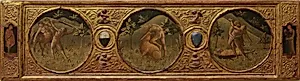
Medium
Tempera on wood, embossed and gilt ornament
Dimensions
Overall 18 3/4 x 69 1/2 in. (47.6 x 176.5 cm); each medallion, diameter 15 in. (38.1 cm)
Classification
Paintings
Department
European Paintings
Museum
Metropolitan Museum of Art, New York, NY
Credit
Bequest of Edward Fowles, 1971
Accession Number
1971.115.4
Rights
Public Domain
Tags
Art Historical Context
Behold *The Labors of Hercules a captivating panel painting from the Metropolitan Museum of, attributed to an anonymous Italian artist from Florence or Siena. This elongated work, measuring nearly six feet wide, features a series of ten 15-inch-diameter medallions depicting the legendary hero's twelve mythic feats—slaying the Nemean Lion, battling centaurs, and more—adorned with lively putti (cherubic figures) amid embossed and gilt borders. Likely created in the late 15th or early 16th century, it evokes the Renaissance fascination with classical antiquity, transforming ancient Greek and Roman tales into vibrant domestic decoration. Crafted in tempera on wood, a meticulous egg-based medium prized for its luminous detail and durability, the panel showcases the artist's skill in narrative storytelling. The embossed and gilded ornamentation—punched gold leaf creating textured, jewel-like frames—adds opulent sparkle, typical of Tuscan workshops producing spalliere (bench-back panels) or cassoni (wedding chests) for elite homes. This technique highlights the era's blend of Gothic ornateness with emerging Renaissance humanism. Hercules embodied strength, virtue, and triumph over chaos, making this artwork a moral emblem for Renaissance patrons. Bequeathed to the Met in 1971 by Edward Fowles, it invites us to marvel at how myths bridged ancient heroism and Italian Renaissance splendor.