
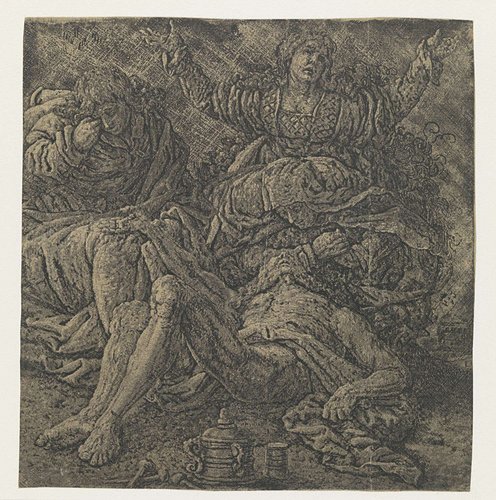
The Lamentation of Christ
ca. 1630 - ca. 1633
Medium
line etching with tone and highlights created by using crosshatching and stopping-out, printed in black on paper prepared with a cream-coloured ground containing lead
Dimensions
157; 163
Rights
Public Domain
About this artwork
height 163 mm x width 157 mm (trimmed within the printed surface, at the top almost along the plate mark)
Art Historical Context
### The Lamentation of Christ ercules Segers, a pioneering Dutch printmaker of the early 17th century (c. 1589–1638), created *The Lamentation of Christ around 1630–1633, during the Dutch Golden Age. This intimate etching depicts the biblical scene of Christ's body mourned by the Virgin Mary and disciples after the Crucifixion—a poignant theme in Northern European art, evoking deep emotion and spiritual reflection. Segers, though lesser-known than contemporaries like Rembrandt (who owned his works), revolutionized printmaking with experimental techniques, bridging etching and painting. The artwork's technical brilliance shines in its line etching, where dense crosshatching builds rich tones and shadows, while "stopping-out" (varnishing parts of the plate mid-etching) preserves crisp highlights for dramatic light effects. Printed in black ink on a specially prepared cream-colored paper ground infused with lead, it achieves a luminous, almost painterly quality rare for etchings of the era. Measuring just 163 × 157 mm (trimmed close to the plate mark at the top), its small scale invites close contemplation, heightening the emotional intimacy. Segers produced only about 18 known etched plates, often in tiny editions with unique colorations, making surviving impressions like this exceptionally rare. This piece exemplifies his innovative spirit, influencing later artists and underscoring etching's potential as a fine art medium beyond mere reproduction.