
The Life of Christ
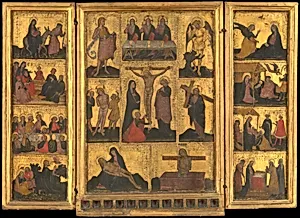
Medium
Tempera on wood, gold ground
Dimensions
Central panel, overall, with engaged frame, 24 1/8 x 16 3/4 in. (61.3 x 42.5 cm), painted surface 20 5/8 x 14 3/4 in. (52.4 x 37.5 cm); left wing, overall, with engaged frame, 23 3/8 x 8 1/4 in. (59.4 x 21 cm), painted surface 21 1/2 x 6 1/2 in. (54.6 x 16.5 cm); right wing, overall, with engaged frame, 23 3/8 x 8 1/4 in. (59.4 x 21 cm), painted surface 21 1/2 x 6 1/4 in. (54.6 x 15.9 cm)
Classification
Paintings
Department
European Paintings
Museum
Metropolitan Museum of Art, New York, NY
Credit
Rogers Fund, 1909
Accession Number
09.104
Rights
Public Domain
Tags
Art Historical Context
Nestled in the Metropolitan Museum of Art's European Paintings collection, *The Life of Christ* a delicate triptych by the Italian artist Franceschino Zavattari likely from the late 14th or early 15th century. Crafted in tempera on wood with shimmering gold ground, this small panel—measuring about 24 x 17 inches overall—folds into a portable altar, perfect for private prayer or travel. The gold leaf background, a hallmark of Italian Gothic art, bathes the scenes in heavenly light, symbolizing divinity and drawing the viewer's eye to sacred moments. The central panel likely anchors the narrative with key episodes from Christ's life, flanked by wings depicting events like the Nativity, Adoration of the Magi, Flight into Egypt, Last Supper, and Saint John the Baptist. These vignettes, common in religious art of the period, invited contemplation of salvation history. Zavattari, part of a prominent Lombardy painting family known for frescoes in Monza Cathedral, employed fine tempera techniques—egg-based pigments layered meticulously—to achieve vibrant colors and intricate details on the wooden panels. Acquired through the Rogers Fund in 1909, this work exemplifies the International Gothic style's elegance, blending narrative storytelling with ornate beauty. It's a window into medieval piety, where art bridged the earthly and eternal.