
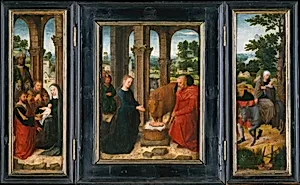
The Life of the Virgin
after 1521
Medium
Oil on wood
Dimensions
Central panel, overall, with engaged frame, 12 3/8 x 10 1/8 in. (31.4 x 25.7 cm), painted surface 9 1/8 x 6 7/8 in. (23.2 x 17.5 cm); each wing, overall, with engaged frame, 12 3/8 x 5 in. (31.4 x 12.7 cm), painted surface 10 3/4 x 3 1/2 in. (27.3 x 8.9 cm)
Classification
Paintings
Department
European Paintings
Museum
Metropolitan Museum of Art, New York, NY
Credit
Frederick C. Hewitt Fund, 1913
Accession Number
13.32a–c
Rights
Public Domain
Tags
Art Historical Context
Nestled in the Metropolitan Museum of Art's European Paintings collection, *The Life of the Virgin* is a delicate triptych by Adriaen Isenbrant, a Flemish master active in Bruges after 1521. This intimate oil-on-wood panel, measuring just over a foot tall when closed, unfolds to reveal key moments from the Virgin Mary's life: the Nativity, Visitation, Adoration of the Magi, and Flight into Egypt. Its compact size—central painted surface about 9 x 7 inches, wings slightly narrower—suggests it was crafted for private devotion, perhaps adorning a wealthy household altar. Isenbrant's work embodies the Northern Renaissance tradition, where oil on wood allowed for luminous glazes and intricate details, evoking the spiritual depth of earlier masters like Jan van Eyck. The engaged frames enhance its portability and protective function, typical of 16th-century Flemish triptychs that believers could open for prayer. Figures of Mary, Jesus, men, and women are rendered with tender realism, emphasizing piety and human connection amid divine events. Acquired through the Frederick C. Hewitt Fund in 1913, this piece highlights the cultural role of such artworks in fostering personal faith during the Renaissance, bridging late medieval iconography with emerging humanism. A gem for visitors, it invites quiet reflection on Mary's enduring story.