
The Man with a Laurel Branch
Medium
Engraving
Dimensions
12 x 9 in. (30.5 x 22.9 cm)
Classification
Prints
Department
Drawings and Prints
Museum
Metropolitan Museum of Art, New York, NY
Credit
The Elisha Whittelsey Collection, The Elisha Whittelsey Fund, 1949
Accession Number
49.97.170
Rights
Public Domain
Art Historical Context
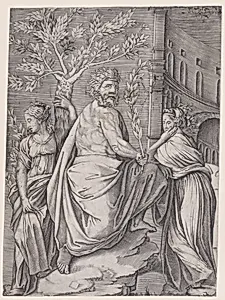
Behold *The Man with a Laurel Branch*, a captivating engraving from the Metropolitan Museum Art's Drawings and Prints collection. Created by the masterful engraver Agostino Veneziano (Agostino dei Musi) after a design by the High Renaissance genius Raphael (Raffaellozio da Urbino), this work dates to around 1514–36. Measuring 12 x 9 inches (30.5 x 22.9 cm), it exemplifies the exquisite reproductive printmaking of the early 16th century, generously gifted through The Elisha Whittelsey Collection in 1949. Raphael's original design likely captures an idealized male figure, evoking classical antiquity with the laurel branch—a timeless symbol of poetic victory and Apollo's favor. Veneziano's burin work translates Raphael's fluid grace into intricate lines, showcasing engraving's power to disseminate Renaissance ideals to a wider audience beyond elite patrons. This technique, involving incising metal plates for inked impressions, allowed Raphael's harmonious proportions and subtle modeling to reach collectors across Europe, bridging painting and print culture. As a testament to collaborative artistry, the print highlights the era's innovative fusion of design and reproduction, influencing Mannerist engravers who followed. Visitors, imagine holding this intimate treasure, its fine details whispering of Rome's golden age—pure Renaissance elegance etched in copper.