
The Nativity
Classification
Prints
Department
Drawings and Prints
Museum
Metropolitan Museum of Art, New York, NY
Credit
Harris Brisbane Dick Fund, 1927
Accession Number
27.78.2(314)
Rights
Public Domain
Tags
Art Historical Context
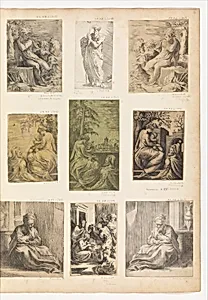
Behold *The Nativity*, a print by the Italian Mannerist master Parmigianino (Girol Francesco Maria Mazzola), around 1524–30. Housed in the Metropolitan Museum Art's Drawings and Prints, this work—acquired through the Harris Brisbane Dick Fund 1927—depicts the sacred birth of Christ, featuring tender infants and devoted women in a classic Nativity scene. Parmigianino, a prodigy from Parma who rose to fame in Rome and later Bologna, infused his art with the elegant distortions and graceful elongations characteristic of Mannerism, bridging the High Renaissance and the more stylized Baroque era. As a print, *The Nativity* exemplifies the revolutionary medium of the early 16th century, which allowed artists like Parmigianino—one of the first to master etching—to reproduce intricate designs for broader audiences beyond elite patrons. His fluid lines and poised figures capture the divine intimacy of the Nativity, a cornerstone of Christian iconography symbolizing hope, humility, and redemption during a time of religious upheaval, including the eve of the Protestant Reformation. This piece invites visitors to marvel at how Parmigianino transformed a timeless biblical story into a visually poetic meditation, blending spiritual reverence with innovative technique. A true gem for contemplating Renaissance devotion through the lens of printmaking's accessibility.
About the Artist
Parmigianino (Girolamo Francesco Maria Mazzola) · 1503–1540
Girolamo Francesco Maria Mazzola, known as Parmigianino, was born on January 11, 1503, in Parma, into a family of artists. The eighth child of painter Filippo Mazzola and Donatella Abbati, he lost his father to the plague at age two and was raised by his uncles, Michele and Pier Ilario Mazzola, modestly talented painters who taught him the techniques of the craft. By his late teens, Parmigianino d...