
The New Testament, The Book of Common Prayer
ca. 1636
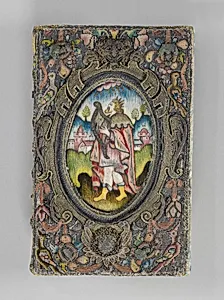
Medium
Silk, bullion, silver, and silver-gilt thread on canvas and satin
Dimensions
7 1/8 x 4 3/4 in. (18.1 x 12.1cm)
Classification
Textiles-Embroidered
Culture
British
Department
European Sculpture and Decorative Arts
Museum
Metropolitan Museum of Art, New York, NY
Credit
Gift of Irwin Untermyer, 1964
Accession Number
64.101.1294
Rights
Public Domain
Tags
Art Historical Context
This exquisite embroidered textile, titled *The New Testament, The of Common Prayer* (ca. 1636), is a rare British masterpiece created by Robert Barker and Richard Whittaker, prominent printers and publishers of religious texts during the early 17th century. a luxurious book cover or binding for sacred volumes central to Anglican worship, it reflects the era's deep reverence for scripture amid King Charles I's reign, when the Book of Common Prayer unified liturgical practices across England. Crafted from silk, bullion, silver, and silver-gilt on canvas and satin, the small panel (just 7⅛ × 4¾ inches) showcases virtuoso embroidery techniques. Fine stitching with metallic threads creates shimmering, jewel-like effects, evoking opulence fit for ecclesiastical or elite patrons. Motifs of birds, musical instruments, and men suggest symbolic decoration—perhaps heraldic birds for divine inspiration, instruments for heavenly harmony, and figures representing saints or apostles—blending piety with artistic splendor. Housed in the Metropolitan Museum of Art's European Sculpture and Decorative Arts collection (gift of Irwin Untermyer, 1964), this piece highlights embroidery's status as a high art form in Stuart England, where women's needlework often rivaled painting in precision and prestige. A testament to faith and craftsmanship, it invites visitors to marvel at how everyday devotion was transformed into wearable treasure.