
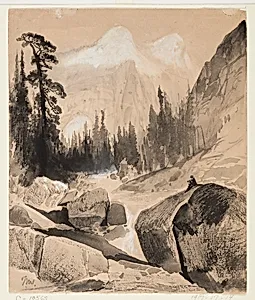
The North Dome, Yosemite, California
Medium
landscapes
Classification
landscapes
Department
Smithsonian Collection
Museum
Smithsonian American Art Museum
Credit
Gift of Thomas Moran
Accession Number
1917-17-14
Rights
Public Domain
About this artwork
Research in Progress
Art Historical Context
Thomas Moran's *The North Dome, Yosemite California* (1872) captures the majestic grandeur of's towering rock formations, a subject that mesmerized 19th-century American artists Born in Britain and later embracing his adopted homeland, Moran (1837–1926) became a leading figure in the Hudson River School, a movement celebrating the sublime beauty of the American wilderness through luminous, atmospheric landscapes. This work, likely rendered in oil or watercolor—a medium Moran favored for its fluidity in evoking mist-shrouded valleys—showcases his masterful use of light and color to convey nature's awe-inspiring scale. Painted during a pivotal era for American conservation, the piece reflects growing national pride in the continent's wild spaces. Yosemite Valley had been granted federal protection in 1864, inspiring artists like Moran to document its wonders and advocate for preservation. Moran's vivid depictions influenced public sentiment, paving the way for the National Park Service decades later. Interestingly, this artwork was a personal gift from the artist himself to the Smithsonian American Art Museum, underscoring his commitment to sharing America's natural heritage. Today, *The North Dome* invites visitors to ponder humanity's place amid untamed beauty, a timeless reminder of art's power to foster environmental stewardship. (198 words)