
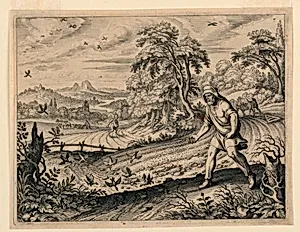
The Parable of the Sower
Medium
Classification
Department
Smithsonian Collection
Museum
Smithsonian American Art Museum
Credit
Smithsonian American Art Museum
Accession Number
1896-31-17
Rights
Public Domain
About this artwork
Research in Progress
Art Historical Context
Michel Lasne’s “The Parable of the Sower,” created around 1650, captures one of the most familiar stories from the New Testament. A French printmaker active during the reign of Louis XIII and the early years of Louis XIV, Lasne specialized in clear, finely detailed engravings that brought religious narratives to a wide audience. The medium of print allowed the image to circulate beyond churches and palaces, reaching households and schools where viewers could reflect on the parable’s message about faith, perseverance, and the different ways people receive spiritual teaching. In mid-seventeenth-century France, such prints served both devotional and educational purposes. Lasne’s careful line work and balanced compositions helped viewers follow the story visually—seeds falling on fertile ground, rocky soil, and thorny paths—without needing to read text. Today the work resides in the Smithsonian American Art Museum, where it offers visitors a glimpse into how Baroque-era artists used accessible printmaking to share timeless moral lessons across social classes.