
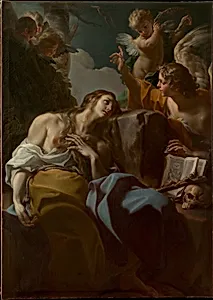
The Penitent Magdalen
ca. 1750
Medium
Oil on canvas
Dimensions
63 x 46 1/2 in. (160 x 118.1 cm)
Classification
Paintings
Department
European Paintings
Museum
Metropolitan Museum of Art, New York, NY
Credit
Purchase, Mark Fisch and Rachel Davidson Gift, in honor of Keith Christiansen, 2006
Accession Number
2006.54
Rights
Public Domain
Tags
Art Historical Context
In the hushed galleries of the Metropolitan Museum of, Corrado Giaquinto'sThe Penitent Magdalen (ca. 1750) captivates with its poignant portrayal of spiritual redemption. Giaquinto, a leading Italian Rococo painter from Genoa, masterfully blends late Baroque drama with the era's lighter, more graceful elegance. Working primarily in Naples and at the Spanish court, he specialized in religious subjects that evoke deep emotion, and this oil on canvas—measuring an imposing 63 x 46½ inches—exemplifies his skill in grand altarpiece-style compositions. The painting depicts Mary Magdalene in her classic penitent guise, a popular motif in 17th- and 18th-century art symbolizing repentance and the triumph of faith over sin. Seated amid a rocky wilderness, she gazes heavenward in tearful contemplation, her long flowing hair a veil of humility. A skull at her feet underscores memento mori—the reminder of mortality—while ethereal angels hover above, offering divine comfort and rays of light that pierce the shadows, illuminating her path to salvation. These elements draw from Counter-Reformation iconography, emphasizing personal devotion during a time when such imagery inspired the faithful. Giaquinto's virtuoso technique shines in the luminous glazes and swirling drapery, creating a sense of otherworldly grace typical of Rococo. Acquired in 2006 through a generous gift, this work invites visitors to reflect on themes of forgiveness that resonate across centuries.